
Stress Tap Ease: ASMR Games
Piggy Panda IncRole Playing
4.758.00 Reviews
- Version
- 4.4
- Installs
- 1.00M
- Age Rating
- Teen
Screenshots
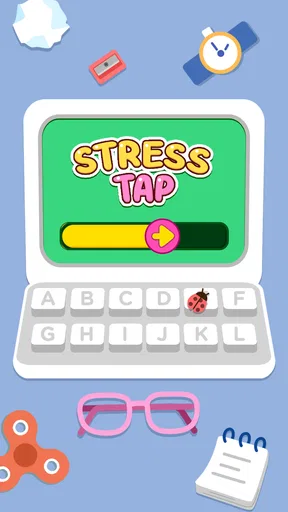



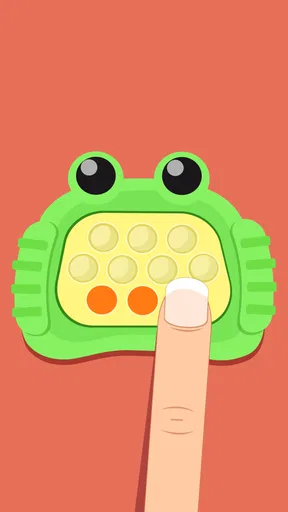

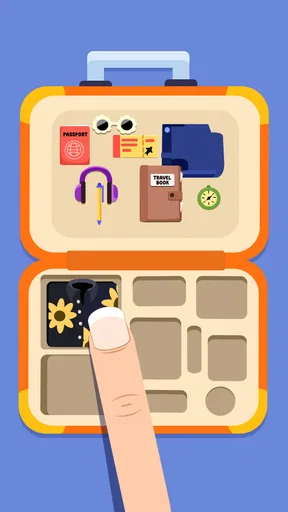
Our Review of Stress Tap Ease: ASMR Games
 Analysis by Appyee
I spent time with Stress Tap Ease: ASMR Games as a light role-playing puzzle game, and my first impression was clear: this is built for short, calming interactions rather than a deep adventure or a demanding brainteaser. Its central idea is simple tapping, but the appeal comes from how that action turns small moments of attention into a relaxing routine. If you want something you can open when your mind feels busy, it has an approachable personality. If you expect a large story, complex character development, or the long-term depth of a traditional role-playing game, you may find it too modest.
Piggy Panda Inc is the developer behind the game. It is free to install, carries a Teen content rating, and supports devices running Android 8.0 or later. The current version is 4.4, and the game has reached over a million installs with a 4.7 average from around 2.7 thousand ratings. Those figures suggest that the basic concept connects with a sizeable audience, although popularity alone does not guarantee that its gentle pace will suit every player.
How the free experience earns its place
I find the free starting point most useful as a way to test whether this particular mix of tapping and light puzzles actually helps me unwind, rather than assuming that a soothing theme will suit everyone. I’d pay attention to whether I want to return to it after a few brief sessions; that gives a better basis for weighing the optional spending than the initial novelty does.
A clear cost advantage for casual players
The most important value point is straightforward: you can start playing without paying an upfront purchase price. That makes it easy to test the tapping and puzzle rhythm before deciding whether it belongs in your regular app rotation. I appreciate that approach here because the game’s appeal is personal. Some people will find repetitive ASMR-style interaction soothing, while others will quickly want more challenge. A free entry point lets you discover which group you are in without committing money first.
There are in-app purchases priced at $1.99 per item. I would treat those as optional spending rather than part of the basic cost of trying the game. The practical question is not whether the game can be opened for free, but whether the free portion already gives you enough relaxing play to justify keeping it installed. For me, that is the right way to judge it: use the free access as a trial of the mood and interaction, then decide whether any extra purchase would genuinely improve your routine.
This is also a game where the price should be considered alongside the type of entertainment it offers. It is not trying to replace a full-length role-playing adventure. You are paying, if you choose to make a purchase, for a small, repeatable experience rather than an expansive world. That can be good value for someone who wants a few quiet minutes, but it is less convincing for a player who measures value by story length, strategic variety, or hours of progression.
What the game actually gives me
The strongest part of the experience is its low barrier to entry. Tapping does not require a complicated control scheme, and the puzzle framing gives the activity more purpose than simply pressing the screen at random. I can pick it up without remembering a long chain of instructions, which matters when I am using a game to unwind rather than to concentrate intensely.
The ASMR angle also changes how I judge success. In a conventional puzzle game, I usually want increasingly clever problems and a satisfying sense of mastery. Here, the value is partly in the physical rhythm of interacting with the screen. The action can feel like a small reset between tasks. That makes it suitable for a break after reading, commuting, or finishing a demanding piece of work, provided you enjoy repetitive tactile play.
Its role-playing classification may attract people who normally browse that category, but I would set expectations carefully. The experience is closer to a calming puzzle activity with role-playing framing than to a substantial character-driven quest. That distinction is useful before downloading: choose it for the tap-and-relax loop, not because you expect the systems of a large role-playing title.
A realistic everyday session
Imagine finishing a busy afternoon and having ten minutes before dinner. You do not want to start a competitive match, and you do not have enough time to become absorbed in a story game. This is where I see the clearest use case. I can open the game, work through a few interactions, and stop without feeling that I have abandoned an important mission or interrupted a carefully timed multiplayer round.
That same quality makes it useful during short waiting periods. It is more engaging than staring at a blank screen, but less demanding than a strategy game that requires planning several moves ahead. The catch is that the relaxed loop depends heavily on personal taste. If repeated tapping makes you restless rather than calm, the game’s main strength becomes its main weakness.
Small habits that make the experience better
I found it helps to use the game deliberately rather than opening it automatically every time I am bored. A short session works best when I treat it as a transition between activities. Playing while already distracted can make the simple interactions feel empty, whereas giving the game a few uninterrupted minutes makes its soothing design easier to appreciate.
Another useful approach is to compare your reaction to the puzzle element with your reaction to the tapping itself. If the tapping is enjoyable but the puzzle side feels too slight, you may prefer using the game strictly as a calming break. If you want more mental stimulation, it is worth recognizing early that a traditional logic-puzzle game may offer better value for your attention.
I also recommend judging purchases by frequency of use, not by curiosity. Because each in-app item costs $1.99, a purchase makes more sense when you are returning regularly and can identify what extra value you want. Buying simply because the game is free to start can turn a low-commitment experiment into spending without a clear benefit. The free access is enough to answer the more important question first: do you actually enjoy returning to this particular loop?
Where the design feels limited
The simplicity that makes the game welcoming can also make it feel thin. Players who need constant novelty may run out of enthusiasm because tapping and light puzzle interaction do not provide the same range as a full role-playing campaign. I would not choose this as my main game if I wanted exploration, detailed progression, or a strong narrative to carry me from one session to the next.
There is also a difference between relaxing repetition and uninteresting repetition. The game works when the rhythm feels satisfying, but that effect can fade if I play for too long in one sitting. My advice is to keep sessions short and let the game remain a small ritual. Trying to force extended play from a design meant for brief relief may expose its limited depth more quickly.
The Teen rating is another point parents should consider. It does not automatically tell me that the game is unsuitable for every younger player, but it does mean I would not assume it is intended for children simply because the concept is easy to understand. Adults can enjoy it, and older teenagers may find the calming format appealing, but families should make their own decision rather than relying on the simple tapping premise.
How it compares with familiar alternatives
Compared with a standard logic-puzzle game, this title places more emphasis on mood and tactile repetition than on solving increasingly demanding problems. A conventional puzzle app is the better choice if your goal is to train pattern recognition, chase high scores, or feel challenged by every level. Stress Tap Ease is better when you want the puzzle element to support relaxation rather than dominate the session.
Compared with a large role-playing game, it is far easier to enter and leave. You do not need to remember a complicated plot or manage a broad set of systems before enjoying a few minutes. The trade-off is obvious: you receive less narrative investment and less strategic depth. I see it as a companion to bigger games, not a replacement for them.
It also differs from competitive mobile games in an important way. There is no reason to approach it with the same pressure to improve quickly or outperform other players. That makes it a better fit for someone who wants a private wind-down activity. On the other hand, players who thrive on competition, social goals, or constant achievement may find the lack of pressure less motivating.
Fairness, spending, and what I can judge
The purchase information gives me a clear starting point for judging cost: the game is free to install, and in-app purchases are priced at $1.99 per item. That supports trying the basic experience before spending. It does not, by itself, tell me what an item contains, whether purchases affect progression, or whether they change how challenging the game feels, so I would not assume that paying provides an advantage or is necessary.
For a player concerned about fairness, the sensible approach is to decide based on personal enjoyment rather than fear of missing out. If the free version already offers the kind of brief, calming session you wanted, there is no reason to treat a purchase as a required step. If you are considering an item, check its description and the purchase flow in the app before confirming; make sure the stated benefit is something you actually want.
This is also why I would not compare its spending model directly with competitive games that sell power or rank advantages. The available purchase facts do not establish that this game has such systems. I can say that each listed item has a stated price, but the content and gameplay impact need to be judged from the item details themselves. That distinction keeps the recommendation fair: the low-cost entry is attractive, while the value of optional spending depends on what is offered and how often you play.
Who is most likely to get real value
I would recommend giving it a try if you enjoy ASMR-inspired interactions, simple puzzles, and games that can be played in short bursts. It is particularly suitable for people who want a gentle screen activity after work or study, when a complicated game would feel like another obligation. The free starting point makes that experiment easy, and the current version gives Android users on supported devices a straightforward way to see whether the format fits.
It may also work for players who struggle to settle on one large game. Instead of asking for a long commitment, it offers a compact activity that can sit between more demanding hobbies. I can imagine keeping it installed for those moments when I want something interactive but do not want to invest in a campaign, compete against strangers, or solve a difficult puzzle under pressure.
I would skip it if you are searching for a rich role-playing experience with a substantial story, deep character choices, or a long progression path. I would also look elsewhere if your idea of relaxation involves variety and challenge. A more traditional puzzle game, a narrative adventure, or a strategy title will probably give you more to think about over repeated sessions.
My final decision on downloading and spending
My verdict is to try the free version, but keep your expectations focused on its calming tap-and-puzzle identity. The game’s value comes from accessibility, short sessions, and a low-pressure mood. It does not need to be a huge adventure to be useful, and I think it succeeds when treated as a small pause in the day rather than a complete gaming destination.
I would not make an in-app purchase immediately. First, I would return several times and decide whether the free experience has become part of my routine. Since individual purchases cost $1.99, the sensible choice is to spend only when you know the game is delivering a type of relaxation you cannot easily replace with another free activity. That keeps the decision grounded in actual use rather than the novelty of downloading something new.
Overall, Stress Tap Ease: ASMR Games is a focused option for players who want gentle interaction and do not need a demanding challenge. Its 4.7 average and audience of over a million installs show that the concept has broad appeal, while my own experience suggests its success depends on enjoying repetition. Download it for a calm, low-commitment break; skip it if you want a full-scale role-playing adventure.
Verdict
Strengths of Stress Tap Ease: ASMR Games
- Simple tap-based gameplay is easy to learn and play anytime.
- Short sessions make it suitable for quick stress-relief breaks.
- ASMR-inspired sounds create a calming and immersive atmosphere.
- Minimal controls make it accessible for most players.
- Relaxing visuals and feedback provide a satisfying casual experience.
Limitations of Stress Tap Ease: ASMR Games
- Gameplay can become repetitive after extended sessions.
- Some calming features may require watching ads or making purchases.
- The relaxing effects depend heavily on personal sound preferences.
- Limited challenge may not appeal to players seeking deep gameplay.
- Background audio may feel distracting in quiet or shared environments.
Other Releases by Piggy Panda Inc
View All
Car Makeover: ASMR Games
Role Playing4.3

Cake Maker: Kids Cooking Games
Role Playing4.3

Kids Coloring Pages For Boys
Educational4.6

Pizza Maker Kids Cooking Games
Role Playing4.6
Similar Picks in This Category
View All
Hair Dye
CrazyLabs LTD4.4

Monster High™ Beauty Salon
CrazyLabs LTD4.5

Bus Simulator - Bus Games 3D
Jima Apps4.4

Flight Pilot: 3D Simulator
Wildlife Studios4.1


Super Stylist Fashion Makeover
CrazyLabs LTD4.4
Frequently Asked Questions
What is Stress Tap Ease: ASMR Games?
Stress Tap Ease: ASMR Games is a casual relaxation app built around short, satisfying interactions designed to help you unwind. It offers tap-based mini-games and ASMR-inspired sounds, animations, and tactile feedback. Instead of requiring complex rules or long sessions, the app focuses on simple activities that can be played for a few minutes whenever you need a mental break.
How does Stress Tap Ease: ASMR Games help with relaxation?
The app uses repetitive tapping, calming visual effects, gentle sound feedback, and straightforward gameplay to create a soothing experience. These elements may help distract you from everyday stress and provide a relaxing pause during the day. However, it should be viewed as entertainment and a personal relaxation tool, not as a medical treatment for anxiety, stress disorders, or other mental-health conditions.
Is Stress Tap Ease: ASMR Games suitable for children?
The simple controls and non-competitive style may make Stress Tap Ease: ASMR Games accessible to many younger players, but parents should still check the current age rating and store listing before downloading it. It is also worth reviewing advertising, in-app purchase, privacy, and data-collection information. Headphones should be used at a comfortable volume, especially by children and sensitive users.
Does Stress Tap Ease: ASMR Games require an internet connection or include purchases?
Some features may work without a constant internet connection, but availability can depend on the app version, advertising system, and any online content it provides. Before installing, check the Google Play Store or Apple App Store listing for the latest offline requirements. Also review the in-app purchase section, since optional upgrades, ad removal, or extra content may be offered.
Are there any drawbacks to using Stress Tap Ease: ASMR Games?
The experience is intentionally simple, so users looking for deep gameplay, story progression, or challenging objectives may find it repetitive after extended sessions. ASMR sounds can also be relaxing for some people but irritating or uncomfortable for others. Advertisements, device compatibility, battery use, and touch or sound sensitivity can vary, so trying a short session first is the best way to judge whether it suits you.
Play our best games!


